
Until recent years, no one had reason to realize the innumerable instances in everyday life in which we rely on the law to distinguish between the sexes. We rely on that understanding of our anti-discrimination laws in order to keep boys’ and girls’ bathrooms separate in public elementary schools, women’s and men’s swim teams separate in college, prisons separated by sex, and even to request a same-sex pat-down at the airport when our luggage sets off the scanner.
“Discrimination” may be a loaded word in casual conversation, but under the law, it’s essential in thousands of contexts to distinguish between males and females. While we have the same First Amendment rights, the same right to vote, and the same right not to be discriminated against on the basis of sex in contexts where sex is irrelevant, the law must be able to recognize that in some contexts, biological sex matters a lot. When the law is unable to recognize biological sex, women’s opportunities, rights, and even safety are compromised by the intrusion of males into their competitions and intimate spaces.
The left had been chipping away at the law’s ability to take basic sex distinctions into account for a long time and in a variety of ways, even before the transgender craze of the 2010s and ’20s. Since the 1970s, activists have been attempting to pass the Equal Rights Amendment, which would usurp the current, more flexible interpretation of the Equal Protection Clause, a flexibility that leftist legal groups have also been trying to get the Supreme Court to eliminate for decades. In its place, they demand interchangeability between males and females under the law.
It is in that longer-running context of decrying legal recognition of the two sexes as backwards and obsolete that the rise of people identifying as the opposite sex provided a new front of opportunity for those who wanted to see the sex binary destroyed and to force the law to be blind to sex distinctions.
Despite the overwhelming acquiescence and even enthusiasm of institutions, much of which is detailed in other chapters, the idea that biological sex is mutable has never really caught on with the American public. Democrats have tried to pass the Equality Act, which adds “gender identity” to the list of protected classes under the Civil Rights Act, every year since 2017. While some blue states have successfully passed state versions of this statute, known as Sexual Orientation and Gender Identity (SOGI) laws, the Equality Act has repeatedly stalled out because of the public’s increasing awareness that “equality” means protections for men entering women’s locker rooms.
Activists who wished to see the definition of sex scrambled in the law, therefore, mostly had to find ways other than direct legislation to accomplish their goals. The legal movement to gut the definition of sex and make the law a slave to the whims of self-identification has primarily been advanced by regulatory bodies, especially those interpreting civil rights law and anti-discrimination statutes, as well as by courts and other policymaking bodies outside the normal electoral system.
Civil Rights Law and the Definition of “Sex”
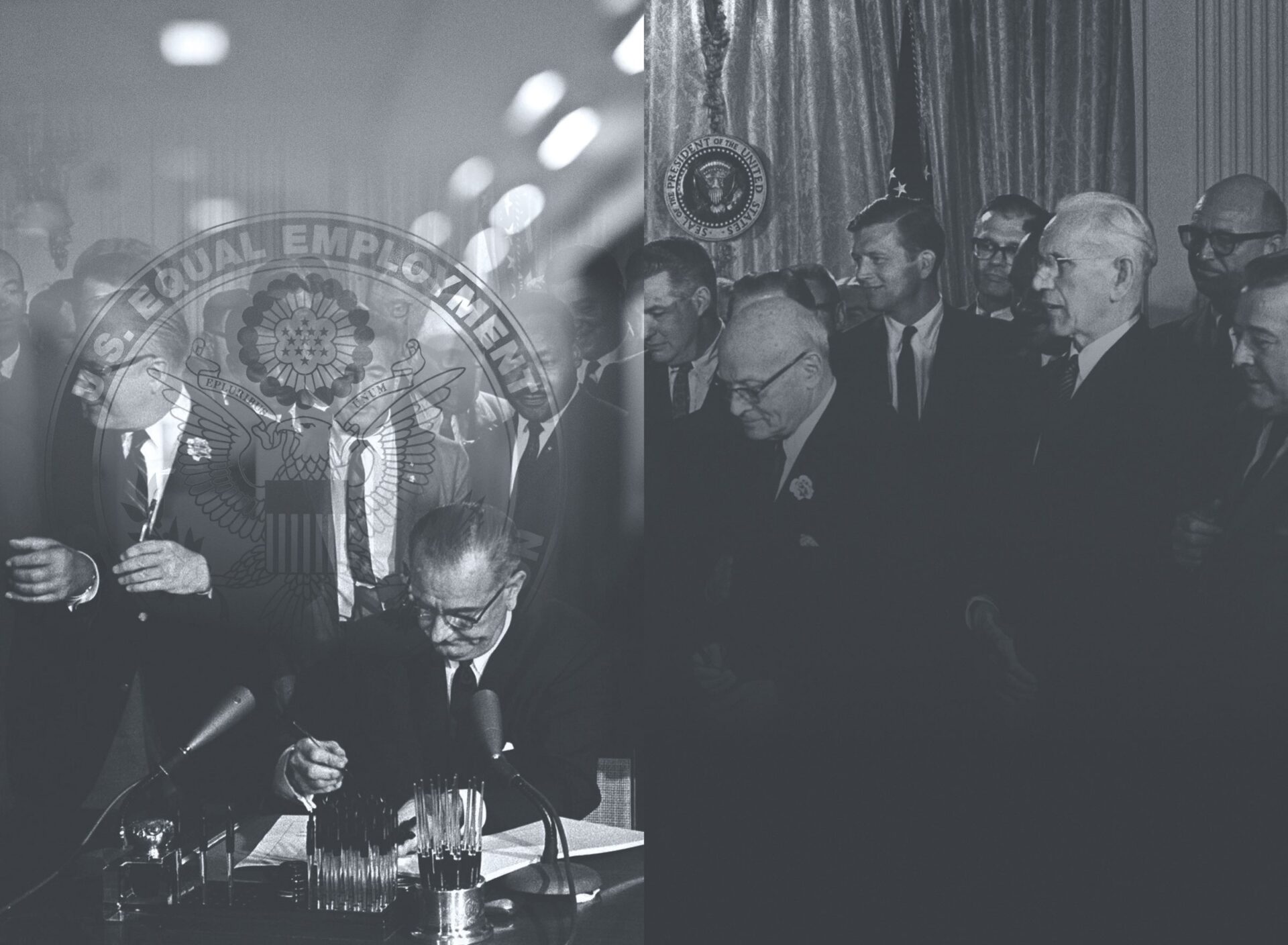
For such a powerful and pervasive statute in American life, the anti-discrimination piece of the Civil Rights Act of 1964 (CRA) is quite simple. Title IX bars federal money from going to educational institutions or programs that discriminate “on the basis of sex.” Title VII says similarly simply, “It shall be an unlawful employment practice for an employer to [take any employment action] because of such individual’s race, color, religion, sex of national origin.” While both titles include plenty of definitions of terms of legal art, the plain meaning of “sex” itself—male or female—wasn’t even something legislators in the 1960s and ’70s thought they had to bother defining.
That, as will become clear in this chapter, turned out to be a massive mistake.
Title IX
The attempt to shoehorn protections for gender identity into existing civil rights statutes started under the Barack Obama administration as early as 2010. Early on, the Department of Education’s Office of Civil Rights (OCR) issued a Dear Colleague letter alleging that the existing statutory language in Title IX, which forbids discrimination on the basis of sex, should be read to include gender identity. But the real enforcement of that radical interpretation of the law came towards the end of the administration’s term, in 2016, when OCR and the Department of Justice (DOJ) issued a joint Dear Colleague letter that laid out what the administration expected in terms of compliance from schools and educational entities covered under Title IX, which includes not only nearly every university (that takes public funds in the form of grants and student loans), but also all public K-12 schools and a subsection of private schools that receive federal funds in some way.
The 2016 guidance warned schools that they risked their federal funding if they treated trans-identifying students as their true sex in any aspect of the educational experience, from locker rooms and bathrooms, to sports competitions and scholarships, to dormitory housing in universities and boarding schools. Furthermore, the guidance did not clearly define who counted as “trans” for the purpose of the regulations, requiring schools to rely on an individual’s self-identification rather than, for example, requiring evidence of medical transition. It also made significant incursions into protected speech, classifying use of biologically correct pronouns as the kind of harassment Title IX is typically read as protecting against, despite the Supreme Court maintaining the Davis standard requiring severe, pervasive, and objectively offensive actions or language to qualify.
Because it was enjoined by a federal judge shortly after issuance for violating the Administrative Procedure Act (the notoriously loose-jointed “Dear Colleague” process informs relevant parties about how the law in question will be enforced), this radical move in the midst of the election season went mostly underreported. It was reversed by the incoming Trump administration shortly after taking office. Under Secretary Betsy DeVos, the Trump administration engaged in careful APA rulemaking that not only rescinded the gender identity aspect of the previous Dear Colleague letters, but also realigned the regulations under Title IX with Supreme Court precedent on issues such as due process on college campuses in cases of accused sexual misconduct and the ability of universities to curtail protected speech in both the pronoun context and any other controversial speech that did not rise to the Davis standard.
Some lower courts, however, initially blessed the Obama administration’s outrageous interpretation of Title IX. In G.G. v. Gloucester County School Board, a female student identifying as male was not allowed in the boys’ restrooms, with school board policy instead directing schools to make a single-stall solution available to her. The Fourth Circuit ruled in favor of the student and the Obama administration’s interpretation of Title IX, and the appeal to the Supreme Court was vacated because of President Trump’s election and the reversal of the underlying policy in 2017.
The Obama edict nevertheless laid the path forward (“pen and phone”) for advocates frustrated by their continued inability to get federal protections added for gender identity through Congress. In between the first Trump administration’s rulemaking and the next election, the Supreme Court also decided Bostock v. Clayton County, which would provide the legal excuse for the incoming Biden administration to reopen the issue of gender identity.
While Bostock is frequently cited as adding gender identity to the list of protected classes in Title VII, there are a number of problems with interpreting the case in that way. First, contra popular understanding, that’s not what Justice Gorsuch’s opinion actually held. He did not add gender identity as a protected class; instead, he stacked analysis of particular behaviors in the workplace by an employee who identifies as transgender within the concept of sex. In Justice Gorsuch’s reasoning, if an employer fires a male employee for wearing a skirt to work when that employer would not fire a female for the same thing—that is, wearing a skirt to work—then that’s a discrimination on the basis of sex under Bostock’s analysis. In point of fact, this analysis relies on the male employee being a man in a skirt, and not on the nebulous concept of gender identity; the protected category remains biological sex. Unfortunately, this precise textual reasoning of the court in Bostock has been predictably totally ignored by lower courts and by Democratic administrations, both interested in pushing the concept of gender identity as a protected class. Even though the opinion does not legally validate their claims, it flung the door open for activists to push the same policy they issued during the Obama administration with a new excuse.
Second, Bostock makes an explicit distinction between its analysis in the employment context (Title VII) and the education context (Title IX), both because the substantive situations that arise are different and because Title IX has textual exceptions to permit, e.g., sex-separated dorm rooms, sports teams, and other situations where “discrimination on the basis of sex” was understood at the time to be common sense. In 2021, the DoEd initially acknowledged these differences in application, clarifying that the Bostock case decided under Title VII did not affect the Trump administration’s 2020 rule regarding the Department’s “longstanding construction of the term ‘sex’ in Title IX to mean biological sex, male or female.”
Nevertheless, even though Bostock explicitly does not apply to Title IX, the incoming Biden administration’s DoEd claimed it not only permitted but also conveniently necessitated the resurrection of the exact interpretation previously floated by the Obama administration, well before Bostock was decided.
In 2024, the Biden administration released 1,577 pages of final regulations on Title IX, declaring that treating a student of any age as his or her biological sex constituted impermissible discrimination and “harm” in contradiction of the requirements of Title IX. This demand, like its close twin, the Obama administration guidance, was backed by the threat of withdrawing funding from any school, kindergarten through university and professional schools, that maintained separate bathrooms, locker rooms, or dormitories for boys and girls.
Because of the political fervor around the issue of women’s sports, a visibility created by the hard work of female athletes speaking out and the organizations supporting them, the Biden administration tried to punt the sports question, promising a second rulemaking on the sports issue specifically, even though the plain language of their rule obviously included sports as an activity under Title IX. This transparent political fig leaf was enough for the media to unquestioningly report that the regulation did not apply to sports, despite the fact that the administration had been using the gender identity interpretation of Title IX for years already in the sports context. For example, when the West Virginia legislature passed a law keeping women’s sports in their school systems female, the Biden administration filed a brief in the Fourth Circuit claiming that their interpretation of Title IX superseded that state law; in other words, the Biden administration’s lawyers were saying one thing in court, and its policymakers and spokespeople were saying the opposite to the media.
A coalition of state AGs, as well as independent organizations representing female athletes, all filed suit against the regulations on both substantive and administrative grounds, claiming that changing the law so substantially was not in the power of the unelected bureaucrats at the Department.
These cases mainly led to a series of enjoinments.
State of Kansas v. U.S. Department of Education led to a preliminary injunction against the rule in Kansas, Utah, Alaska, Wyoming, and any school attended by members of plaintiff organizations Moms for Liberty, Young America’s Foundation, and Female Athletes United. Similarly, in Texas, a preliminary injunction was issued against the regulations in Texas v. U.S. Department of Education, likewise separately in cases in Louisiana and Arkansas. However, in Alabama the District Court for the Northern District upheld the regulations in a lawsuit brought by the states of Alabama, Georgia, and South Carolina, as well as the Independent Women’s Law Center, Independent Women’s Network, Parents Defending Education, and Speech First, prompting an appeal to the Eleventh Circuit, where once again, a preliminary injunction was granted.
Finally, Tennessee v. Cardona, filed in the Eastern District of Kentucky, led to the regulations being blocked by preliminary injunction in Tennessee, Kentucky, Ohio, Indiana, Virginia, and West Virginia, finding that the Department exceeded its authority in issuing them and that they violated both the First Amendment and the Spending Clause requirement in the Constitution. It also issued a nationwide vacatur of the entire final rule, on the basis that the pieces of it that violated the Constitution, the APA, or exceeded legal authority of the regulating agency were inseparable from the totality of the rule, a holding that the Supreme Court upheld when it denied a Biden administration request for a stay, killing off the rule in advance of the incoming Trump administration.
Note again that during all this time, the Equality Act, which explicitly adds sexual orientation and gender identity to the list of protected categories under Titles II, III, IV, VI, VII, and IX of the Civil Rights Act in exactly the way the Obama and Biden administrations claimed, failed to pass Congress every time it was repeatedly introduced, starting with its first introduction in modern form in the 114th Congress in 2015. In other words, during this entire period of regulatory back-and-forth, the proposed policy change did not have the support of the representatives actually elected to make changes to the law. Indeed, it’s clear that the two Democratic administrations during this time period were regulating in direct circumvention of their failures in Congress. As will become clear throughout this chapter, the policy of elevating gender identity to a protected class has never been popular in the United States, and for the most part, its proponents have had to use regulatory bodies, courts, and other methods to enshrine their view to circumvent the will of voters on this matter.
Title VII
The redefinition of “sex” didn’t stop in the education context with Title IX; other titles of the Civil Rights Act were similarly perverted by the unsupportable swap of “gender identity” for the clear meaning of the word “sex” in the statute.
Title VII is the part of the CRA that covers workplace discrimination, and it is overseen by the Equal Employment Opportunity Commission (EEOC). In April 2024, the EEOC issued guidance that stripped women in the workplace of their rights, privacy, and dignity under the tortured rationale that not allowing men access to single-sex spaces at work was discriminatory. The guidance also furthered the chokehold of the most easily offended at work by classifying “repeated and intentional” use of biologically correct pronouns as “harassment.” You read that correctly: Under the Biden administration, the body tasked with preventing workplace harassment actually required employers to allow men to share bathroom and showering spaces alongside female colleagues (needed in some kinds of work), but forbade calling that same male employee “he” as harassment.
While traditional “women’s organizations” stood by or expressed support, the Independent Women’s Law Center accepted the complaints that immediately began rolling in from female employers, which the organization publicly testified about at a House Oversight Committee hearing.
One employee who worked with chemicals necessitating daily showers at work in Ohio wrote that her employer was forcing their mostly uncomfortable female workforce to shower with a fully biologically intact male employee. Another in a totally different line of work—concert tour staffing—reported that a male colleague was purposely timing his showers so that he could strip down in front of the women and that complaints to management went nowhere.
Incredibly, the EEOC, which has long warned employers of tolerating even the mildest sex-related jokes in the workplace under the Biden administration, not only did not forbid but actually required employers to tolerate male employees flashing their genitals at female employees, so long as they self-identified as female.
From 2022 to 2024, the EEOC sacrificed the basic workplace rights of women on the altar of gender ideology and told employers they must force female employees to use the restroom, pump breast milk, and, in some contexts, shower or change alongside male colleagues as a condition of employment. With the same swoop, it unconstitutionally restricted their First Amendment rights to speak the obvious truth by classifying plain language describing a person’s sex as “harassment.”
Like so many gender identity-privileging legal policies, this was enforced by the unaccountable administrative state on thin grounds for reinterpretation of plain language in the CRA, not put before the American voters by their elected representatives.
HHS Guidance
The Biden administration’s Department of Health and Human Services (HHS) followed the Departments of Education and Justice in redefining the term “sex” in various statutes to create protections and benefits based on gender identity. Unfortunately, the Biden administration did not limit its action in HHS to appointing Dr. Rachel Levine, a trans-identifying man who claims he is a woman, as Assistant Secretary of Health.
In 2021, HHS issued guidance announcing that regulators would interpret Section 1557 of the Affordable Care Act (Obamacare) as prohibiting discrimination on the basis, not of biological sex, but of gender identity, and forcing Medicaid in the states to cover medical “treatments” that purported to change the sex of trans-identifying patients. President Biden also issued an executive order asking HHS to find ways to counter or discourage state-level restrictions on medical treatments such as cross-sex hormones and surgery, including clarifying that HHS supported a “continuum of care” even for minors. HHS also issued millions in grants in activist research cheerleading these treatments.
In 2024, in the run-up to the election, HHS pushed through a formal APA rule codifying these changes, prompting a similar response from Republican-led states as the Title IX guidance. A district court in Mississippi issued a preliminary injunction of the HHS rule in State of Tennessee et al. v. Xavier Becerra, citing concerns very similar to those in decisions about the Biden Title IX rule, namely that the agency did not have the authority to so blatantly rewrite the definition of “sex” in statutes, especially after the reversal of Chevron deference in Loper Bright, and that the Bostock holding applied to neither Title IX nor Obamacare statutes.
In January of 2025, the Trump administration rescinded these various guidances and regulations and terminated around 200 grants, totaling just under half a billion dollars.
Men in Women’s Prisons and PREA
The insanity of ignoring biological sex differences, while most clearly on display to the public in the sports context, perhaps reached its zenith in our penitentiary system. As crazy as it seems, federal and state policies under President Biden and for some years prior, whether explicitly or implicitly, didn’t just okay but also demanded the transfer of male inmates—disproportionately male sex offenders specifically—to female prisons based on little more than a declaration of a trans identity.
Putting burly men convicted of violent offenses in with women is already absurd, but trans-identifying prisoners are more likely to be guilty of sex offenses than the general prison population. In California, which pioneered one of the most extreme laws in the nation, fully one-third of the men who requested transfer based on trans status had sex crimes on their records. Nationwide, the Bureau of Federal Prisons records that nearly half of the trans-identifying male prison population have sex convictions, compared to just 12 percent of the general prison population.
Totally unsurprisingly, the rates of both consensual sexual activity (illegal in prison) and nonconsensual assault have been rising in women’s prisons in states that have encouraged the transfers of males. Even as California politicians, for example, dismissed the fears of rising sexual assault as bigoted, they quietly passed a follow-up bill placing condom vending machines in women’s prisons, adding insult to injury. “They’re very honest once they get here. They’ll say … ‘We just want pussy.’ And so that’s what we’ve been dealing with,” said Alissa Kamholz, a current California inmate, of the males being transferred to female prisons.
But it’s not just the obvious safety and sexual threats that come along with incarcerating men in women’s prisons; it’s the indignities necessary to maintain a higher level of security. Because of sex differences, male prisons often must use more invasive and rough methods of maintaining order, methods that have been transplanted into women’s prisons, which, before the introduction of males, had been able to operate on a more liberal basis.
How did the law end up encouraging or even requiring this absurd result?
False interpretations of the Prison Rape Elimination Act (PREA) and reliance on activist medical guidelines, legislatures, courts, and executive agencies all played a role in placing male sex criminals in female prisons.
PREA and Executive Action
The Prison Rape Elimination Act (PREA) is a 2003 bipartisan statute meant to lower unacceptably high levels of rape and sexual assault in prisons. Under PREA, the DOJ must evaluate the risk of sexual victimization of each prisoner and make adjustments accordingly. But under the Obama administration, it was consistently twisted to encourage the placement of trans-identifying males in female prisons, citing the justification of their own potential for victimization, while providing no counterbalancing factor considering the likelihood of sexual victimization of their female co-prisoners.
In January of 2017, during the last days of the Obama administration, the Department of Justice issued Program Statement 5200.04, titled “Transgender Offender Manual,” laying out guidelines for the treatment of trans-identifying individuals in the prison system. In it, the federal government encouraged “housing by gender identity when appropriate” and cited PREA as the statutory basis for that directive.
Finally, the Obama administration directly discouraged “dedicated facilities” for transgender inmates because of anti-discrimination concerns, cutting off one of the only possible compromise arrangements that keeps trans-identifying males out of women’s prisons while recognizing that they probably do face a heightened risk in all-male prisons. It even provides special “protections” to trans-identifying inmates in the showers, while providing no such protections (such as the option to shower alone, a much sought-after accommodation in prison life) to female prisoners who report being afraid or uncomfortable showering with males.
The first Trump administration kept the Transgender Offender Manual in place only for the first year, before modifying it to “use biological sex as the initial determination” of placement, still permitting the transfer of male inmates “in rare cases.” In 2022, the Biden administration dropped that extremely reasonable modification, eliminating biological sex as the initial determinant of a trans-identifying male’s prison placement.
Federal Detention Centers
Although PREA’s text states the act only applies to “prison rape,” in 2014, the Department of Homeland Security under President Obama extended the regulations under PREA to federal immigration detention centers. In 2015, the President issued a directive ordering the housing of trans-identifying detainees in a manner “ensuring the detainee’s safety,” with no balancing consideration of the safety of female detainees. That policy led to, and continues to lead to, the housing of male detainees in female facilities. The first Trump administration reported that out of 17 detention facilities housing trans-identified detainees, only four of them were all-male. And of course, the Biden administration continued that policy, reiterating that trans-identifying illegal aliens would have “continued access to mental and gender-affirming health care provided by medical professionals,” and continuing to house them according to identification rather than biological sex.
State Courts and Settlements
Despite the focus on federal prisons, the vast majority of our incarcerated population resides in state facilities, convicted of state offenses. Obviously, states vary wildly as to their treatment of trans-identifying inmates, but in the past ten years, there has been an alarming push to grant male inmates the “right” to be housed in a female facility if they identify as women. That push has worked as a pincer movement, with activists working hand in glove with liberal state courts and regulatory bodies, rather than legislative ones, to change law and policy, often not through legislation but through settlements granted in the courtroom.
Policy by settlement has been the more common and insidious method of enacting activist desires, but some states have passed state laws demanding that men be housed in female prisons. As in many cases, the state furthest down this path is California. Since 2020, California has required that “transgender, nonbinary, or intersex” inmates, “regardless of anatomy… be housed at a correctional facility for men or women based on the individuals’ preference.” For years prior, California had already allowed the transfer of post-surgery males to female prisons, but with the 2020 law, SB 132, they explicitly codified this outcome for biologically intact males, who in many cases had only brief histories of self-identifying as “women.”
California’s law is so extreme it has been used to punish women who file complaints against the male inmates inserted into their midst, using them as evidence of discrimination and false accusations in parole hearings. In 2021, four of these silenced female inmates filed a lawsuit against the state, citing First, Fourteenth, and Eighth Amendment (“cruel and unusual punishment”) grounds. That lawsuit was dismissed by the Eastern District of California in 2024. Shortly thereafter, a trans-identifying male in a California women’s prison was formally charged with raping a female inmate.
California’s law may be the most extreme. Still, other states, such as Connecticut, and, after the passage of Proposal 1, New York, grant male inmates the right to be housed in prison according to their declared “gender identity” rather than their biological sex.
In states such as Maine and New Jersey, regulations have instituted a rebuttable presumption that houses inmates according to gender identity rather than sex. Until the recent passage of Proposal 1, New York only allowed the placement of trans-identifying inmates in opposite-sex prisons on a case-by-case basis, subject to an individualized review of the risks. But the settlement strategy proved remarkably effective in the Empire State, where a number of counties effectively set the legal standard in favor of men being housed in women’s prisons through individual settlements with trans-identifying inmates represented by activist legal groups. In addition, in New York City, former Mayor Bill de Blasio advanced the same policy by executive order in 2016.
In 44 more states, the state permits men to be housed in women’s prisons on a case-by-case basis, with a wide range of outcomes from minimally disruptive (because transfers are only granted to rare exceptions) to de facto self-selection.
One possible lever to influence state policy is correcting the bureaucracy’s interpretation of PREA; under that law, any state that doesn’t certify full compliance with the law forfeits 5% of any DOJ prison-related grants it might otherwise receive, unless it starts applying those funds toward compliance.
***
What pulls together the various contexts in this chapter, from collegiate sports, to the workplace, to prisons, is the undemocratic bastardization of the word “sex” in different statutes mostly meant to protect against sex discrimination. Once, the definition of “sex” in law was the same as it was in common sense and in virtually every civilization since the dawn of time. Now, the word “sex,” left undefined, is an invitation to a redefinition that flips statutory purposes on their heads and jeopardizes the privacy, safety, and dignity of both sexes.
As the matter stands today, the issue has been “won” in the culture, but that victory has yet to be fully codified. If this cultural backlash is to have any staying power, it’s critical that the definition of “sex” is restored, both at the state and federal levels. The way to stop the insanity is to define sex under the law in accordance with a simple truth: male and female, equal but distinct, and never interchangeable.