
Throughout the 20th century, transgender theories, identities, and interventions were marginal, limited to niche medical and activist circles. In 2010, public familiarity with the term “transgender” was minimal; polling data and analyses from those years suggest that fewer than 20-30% of Americans even knew what the word meant. Then, from 2014 through 2016, transgender concepts burst into mainstream consciousness.
Multiple factors and events happening simultaneously caused this shift—from Caitlyn Jenner’s high-profile transition to political battles over bathroom bills, prestige television shows featuring transgender characters, and rapid institutional policy changes in corporations, schools, universities, and medical associations. But what made it a historical anomaly was the speed with which it happened.
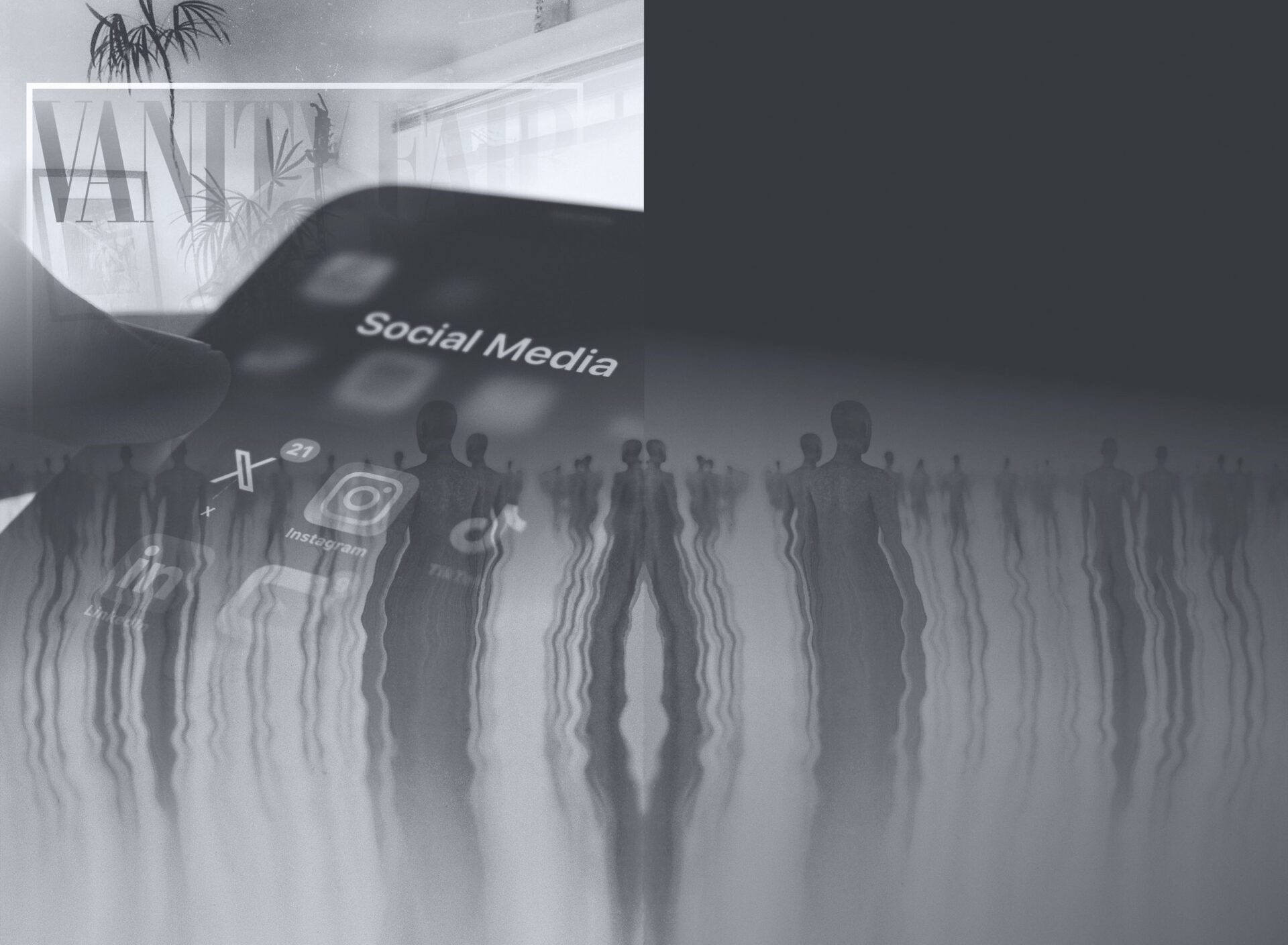
The underlying mechanism that enabled this was the mass adoption of social media platforms, which facilitated, among other things, the rapid spread and adoption of memes. Clinicians began reporting a new pattern: adolescents, particularly girls, were suddenly identifying as transgender without any prior history of gender distress, in a phenomenon researchers termed “rapid onset gender dysphoria.”
Understanding this phenomenon requires examining it through the lens of René Girard’s mimetic theory, i.e., the recognition that human desire is fundamentally imitative. Instinctual drives like thirst and hunger drive us to fulfill our basic needs, but beyond the realm of need is the realm of desire. In the absence of instinct, human beings lose their agency; we desire what others desire and model our identities after observable templates that play out around us.
This process is exacerbated in a social media environment where adolescents are exposed to thousands of models simultaneously, specific identities are celebrated and confer status, and algorithmic feeds amplify the most emotionally resonant content. In such an environment, mimetic desire finds ideal conditions for rapid transmission.
Identity itself becomes an object of mimetic desire. Social media didn’t just spread awareness of transgender concepts—it created an infrastructure for mimetic desire itself to operate at unprecedented scale and speed, transforming gender dysphoria from a rare condition into a social contagion spreading through peer networks.
The Mimetic Nature of Identity Formation
René Girard holds that humans are fundamentally imitative creatures. We learn what to desire by observing what others want. This applies not just to objects but to identities, roles, and personality. Adolescents, still forming their sense of self, are particularly susceptible to mimetic processes: they try on identities, model themselves on peers and admired figures, and seek belonging through shared identification.
Throughout history, this has manifested in various forms: social clusters of anorexia in schools, cutting behaviors spreading through friend groups, and suicide contagions following high-profile deaths. These patterns aren’t simply the result of “copycat” behaviors but are psychological distress being expressed through readily available cultural scripts. The scripts change, but the mimetic mechanism remains constant.
This changed with social media. The 2014-2016 period saw gender dysphoria suddenly begin affecting large numbers of adolescents because, for the first time, it became a socially rewarded script through which adolescent distress—particularly among girls—could be interpreted and expressed. Americans could encounter people with gender identity disorders before social media but did so primarily through traditional media gatekeepers who emphasized difference and difficulty. Social media removed such barriers, suddenly allowing transgenderism to become not only desirable but also urgent.
The emergence of YouTube around 2008-2010 was crucial. Whereas before, transitioning and transgender identity at large were presented as rare, complex, or strange, now independent channels began to promote them as a journey toward authenticity and happiness. Channels like “uppercaseCHASE1” documented transitions not as medical procedures but as transformations into one’s “true self”. These narratives of self-discovery and self-actualization resonated powerfully, especially among vulnerable adolescents.
The format itself was also crucial. Most of these channels didn’t present the topic as a one-time documentary; they were serialized narratives. Viewers began following the creators over months or even years, thus developing parasocial relationships with them. A teenage girl struggling with depression, social anxiety, or discomfort could come across dozens of her age peers describing nearly identical feelings, but who now pointed towards a novel and increasingly visible solution: transitioning.
Not just identity was modeled as a consequence, but also desire itself as well. Wanting to transition became urgent and necessary and was depicted by these YouTubers as a euphoric process. The comment sections started to fill with viewers declaring that “this is exactly how I feel,” or “I think I might be trans too”—public declarations that themselves became models for others reading them.
Tumblr operated similarly but more intensively. Its reblog function created chains of affirmation where a personal narrative of gender questioning could be endorsed, celebrated, and amplified by dozens or hundreds of users, each adding commentary that reinforced the interpretation. A teenage girl posting about discomfort with her body would receive responses explaining her discomfort as “dysphoria,” encouraging her to question her gender identity. But the very platform she was engaging with was biased.
Social media platforms like Tumblr and YouTube encouraged young girls to transition by offering an immediate sense of belonging to a community if they decided to identify as trans.
This is textbook mimetic desire: young people observing others who model both the desire (wanting to be trans) and the desirability (how wonderful life becomes after transitioning), in an environment that provides immediate social reward for adopting the same desire.
Identity Formation Through Language
Terms like “cisgender,” “assigned at birth,” “gender identity,” and “deadnaming” weren’t used to describe existing realities. They were weapons for creating a framework that people could relate to and, eventually, coerce society at large into complying with it.
The idea of being “assigned” a gender at birth, rather than the sex being simply observed, reframes biological sex as arbitrary, in which the individual becomes the judge, as opposed to the societal consensus. Similarly, the term “cisgender” creates a category that most people have never conceived themselves in, implying that gender identity is something everyone has and must examine. “Dysphoria” became a catch-all term for various forms of adolescent discomfort, redirecting normal developmental anxiety toward a specific interpretation. Etc., etc.
“He/him” or “they/them” pronouns appeared in millions of Twitter profiles between 2014-2016, transforming a medical/psychological concept into a form of personal branding within the larger context of a cultural struggle. Declaring pronouns became a social performance that signaled progressivism and self-awareness. More importantly, it modeled others’ behavior. A teenage girl, seeing dozens of her online ‘mutuals’ declare their pronouns, received both a template for expressing her own discomfort and social proof that this was a desirable and legitimate effort.
Tumblr’s callout culture created strong enforcement mechanisms. Using incorrect terminology or questioning the framework led to public shaming, while adopting and correctly using the language brought affirmation and a sense of belonging. This was peer-driven conformity, precisely the mechanism through which mimetic desire spreads most effectively in adolescent populations. The cycle was self-reinforcing, as learning the terminology made one more likely to apply it to oneself. Each person who adopted the framework became a model for others in their network, creating cascading waves of identification.
But the algorithms of these platforms didn’t just amplify exposure; they optimized for engagement. And the content that reached the widest audiences wasn’t clinical or neutral—it was emotionally compelling. Transitioning was content that generated strong emotional responses and high engagement, so algorithms prioritized it. Previous social movements could be ignored by someone without an interest in politics. With social media, this became impossible. Transgenderism became urgent because it incorporated all the winning elements of online culture.
Youth Networks, Peer Contagion, and Mainstream Media
The demographics of social media users created conditions conducive to mimetic contagion. By engaging with each other online, teenagers and young adults who hadn’t yet formed their identities and were thus highly attuned to peer behavior—the heaviest users of platforms like Tumblr, Instagram, and TikTok—created networks where transgender identification could spread in unprecedented ways.
Clinicians began reporting a pattern of adolescent girls with no prior history of gender dysphoria suddenly declaring themselves as trans after being immersed in online spaces, often following one of their peers coming out. This pattern, termed “rapid onset gender dysphoria” (ROGD) by researcher Lisa Littman in 2018, described a phenomenon that didn’t fit previous clinical understandings of gender dysphoria.
The pattern Littman described aligned precisely with mimetic theory’s predictions: clusters of identification within peer networks, sudden onset correlating with social media use rather than early childhood signs, and rapid adoption of transgender-specific language and interpretation frameworks. The mimetic mechanism was visible in the reported patterns: one girl in a friend group identifies as trans, then others follow within weeks or months. Online communities formed in which the very act of questioning one’s gender was treated as evidence of being transgender.
The near-total absence of counter-modeling amplified the phenomenon, as virtually no narratives of people who questioned, explored, and concluded they were not transgender were available online, let alone promoted by the algorithm. Friend groups developed shared vocabularies and interpretations in which ordinary developmental experiences—discomfort with puberty, not fitting feminine stereotypes, social awkwardness— were reinterpreted through a transgender lens. The friend group itself became a reinforcing mechanism: expressing doubt risked social isolation, while embracing the identity brought affirmation and a sense of belonging.
This classic pattern of peer contagion was now operating at unprecedented speed and scale through asynchronous digital networks that transcended geographical boundaries. A girl in a small rural town could be part of a Tumblr friend group where transgender identification was normative, receiving constant modeling and reinforcement that would have been previously impossible in her physical environment.
This was made even worse by traditional media, which by 2015-2016 began following social media trends, sourcing stories from viral content. This created feedback loops in which social media buzz generated news coverage that, in turn, generated more social media buzz. Time’s “Transgender Tipping Point” cover in June 2014 didn’t initiate the mainstreaming of trans identity, but it did accelerate it. Traditional media’s prestige lent legitimacy to online culture.
When the New York Times or CNN covers a phenomenon extensively and sympathetically, it signals that this is important, real, and worthy of attention. Each mainstream media piece about transgender youth, bathroom debates, or pronoun usage was a step towards normalizing what might have otherwise been dismissed as a fringe online trend.
Models and Rewards
The public transition of Bruce Jenner was a watershed moment for transgenderism. No high-status, wealthy, accomplished person choosing to transition was ever celebrated for it. This both mainstreamed transgender awareness and amplified the intensity of the mimetic process.
As an Olympic athlete, Jenner had been the very portrait of youthful masculinity. As a supporting character on the hit television show Keeping Up With the Kardashians, he was portrayed as a diminished, aging patriarch. But by 2015, he was presented on the cover of Vanity Fair with an entirely new image, that of a man trying to be a glamorous woman. This was followed by an appearance at the ESPY Awards, where Jenner accepted the Arthur Ashe Courage Award with an emotional speech that went viral on social media, and by a blitz of fawning media coverage and highly rated interviews with television personalities like Diane Sawyer.
Of course, the model’s status matters enormously in mimetic theory. Jenner provided a high-status model, as not only did he receive praise for his “bravery” from celebrities and influencers, but he also saw media outlets extensively covering and praising these celebrities for praising Jenner. For adolescents watching, the message was clear: this is not just acceptable and admirable, but profitable. The mimetic model not only rewarded the identity itself but also showed how to respond to it and weaponize it for personal status.
The emergence of political debates over whether trans people should be allowed to choose which bathroom to use in 2016 became a national flashpoint within hours through social media mobilization. But beyond its political impact, it served a crucial mimetic function, creating urgency and solidarity. The framing was existential: transgender people were under attack and needed defending.
This created strong in-group/out-group dynamics. Supporting transgender rights became a moral imperative and identity marker for progressives. For adolescents forming political identities, this was a quick way to signal values and belonging. For adolescent girls questioning their gender, the political battles provided both validation (“if society is arguing about people like me, I must be important”) and urgency (“I need to come out and claim this identity because my people are under attack”).
This was quickly followed by medical associations, universities, and schools rapidly adopting “affirmative care” models, driven partly by social media pressure that branded caution as bigotry. Previous clinical approaches involved extensive evaluation before medical intervention. A restrained clinical approach created friction that slowed the formation of transgender identity and guarded against an impulsive rush to medical procedures with permanent physical consequences. But the affirmative model eliminated this friction.
Because questioning one’s gender was now treated as evidence of being transgender, therapy focused on affirming the identity rather than exploring alternatives. Medical interventions became available relatively quickly. Detransition narratives were dismissed or ignored—this removal of gatekeeping accelerated contagion. When identification leads quickly to social affirmation, community belonging, and medical intervention, the identity becomes more real and harder to retreat from. The social and psychological costs of questioning that identification become enormous.
Schools in particular became sites of mimetic spread. When one student transitions and receives support from administrators, counselors, and teachers, this models both the identity and its desirability to other students. When schools implement pronoun policies and gender-neutral bathrooms, they institutionalize the framework, making it the official interpretation of reality rather than one possibility among many.
The Role of Parents
A parallel mimetic process operated among parents, particularly mothers, in Facebook groups and other online forums. Groups like “Parents of Transgender Children” and similar communities grew rapidly between 2013 and 2016, creating spaces where mothers (often of young boys) encountered frameworks for reinterpreting ordinary childhood behavior as evidence of transgender identity. A mother whose son preferred art to sports, played with his sister’s toys, or expressed any gender nonconformity would seek guidance and receive immediate affirmation that these were signs requiring swift action.
The dynamic bore a strong resemblance to Munchausen syndrome by proxy: mothers gained intense social capital, attention, and status within specific communities by having a transgender child. The groups celebrated “trans kids” and their “brave” parents, creating powerful incentives for mothers to interpret ambiguous childhood behavior through a transgender lens. Posts documenting early social transitions—new names, pronouns, girls’ clothing for young boys—received hundreds of supportive comments and reactions, providing dopamine hits of validation that reinforced the interpretation.
Mothers also modeled increasingly aggressive timelines for each other: one would discuss starting her six-year-old son on social transition, another would counter that she’d begun at four, implicitly establishing who was the more affirming, enlightened parent. These groups operated as echo chambers, where expressing caution—such as suggesting that a boy who liked dolls might just like dolls or that such behaviors rarely persisted into adolescence—was met with accusations of “conversion therapy” or warnings about suicide risk.
The mimetic pressure operated on the mothers themselves: seeing other women receive praise, media attention, and community status for having transgender children created a model of what “good parenting” looked like, regardless of whether their sons showed genuine, persistent gender dysphoria or simply failed to conform to masculine stereotypes. The groups transformed everyday parental observation into diagnostic certainty and parental caution into a race toward medical intervention, with each mother’s story of early transition becoming a template for others to follow in pursuit of the same social rewards.
Could This Have Happened Before the Age of Social Media?
When American writer and musician Chaz Bono transitioned in 2008-2009, coverage was substantial, but cultural impact was limited. There was no surge in adolescent transgender identification following Bono’s exposure. Similarly, we can imagine what would have happened if Caitlyn Jenner had transitioned in the 90s or even the early 2000s; it would still have been covered extensively, but it would have benefited from a broader set of mimetic contagion systems beyond localized networks. Adolescents questioning their gender wouldn’t have had access to hundreds of models demonstrating the desirability of affirming transgender identity. Friend groups couldn’t have developed shared transgender identities through digital platforms. Institutional changes would have required decades of gradual persuasion via political activism rather than a few months of social media pressure.
The statistics support this interpretation. Referrals to gender clinics were relatively stable for decades, then increased exponentially beginning around 2013-2014. The demographics shifted dramatically—from primarily adult males to adolescent females. These weren’t people with early-onset, persistent dysphoria; they were adolescents with sudden onset, often with comorbid mental health conditions, frequently emerging from online communities and peer networks.
This was not the typical pattern emerging from increasing societal acceptance of a particular topic. It fits a model of mimetic contagion: a condition spreading through social networks when the proper infrastructure, models, and incentives align. The mainstreaming of transgender identity between 2014-2016, and the simultaneous surge in adolescent transgender identification, represents a case study in how social media has created perfect conditions for mimetic desire to operate at an unprecedented scale. What appeared to be authentic self-discovery was, for many, the adoption of an available and socially rewarded script through which to interpret and express developmental distress.
This doesn’t mean that gender dysphoria isn’t real for some individuals. But it demonstrates that the exponential increase, particularly among adolescent girls with no prior history of gender distress, represents something other than a natural evolution in society as a consequence of debate and/or political activism. It represents desire being shaped, modeled, and spread through networks optimized for precisely this kind of social contagion.
Social media didn’t just spread information about transgender identity—it created an infrastructure where human beings’ fundamentally imitative nature could operate faster and more powerfully than ever before. Direct storytelling removed gatekeepers who might have provided alternative interpretations. Algorithmic amplification ensured inescapable exposure to models. Peer networks accelerated contagion within friend groups. Institutional affirmation removed friction that might have allowed for desistance. Political battles created urgency and in-group solidarity.
The result was a transformation of gender dysphoria from a rare clinical condition into a common adolescent identity expression, spreading through the same mimetic mechanisms that have always driven human behavior—only now spreading with unprecedented speed through the near-instantaneous medium of the internet, unconstrained by physical and social proximity.